
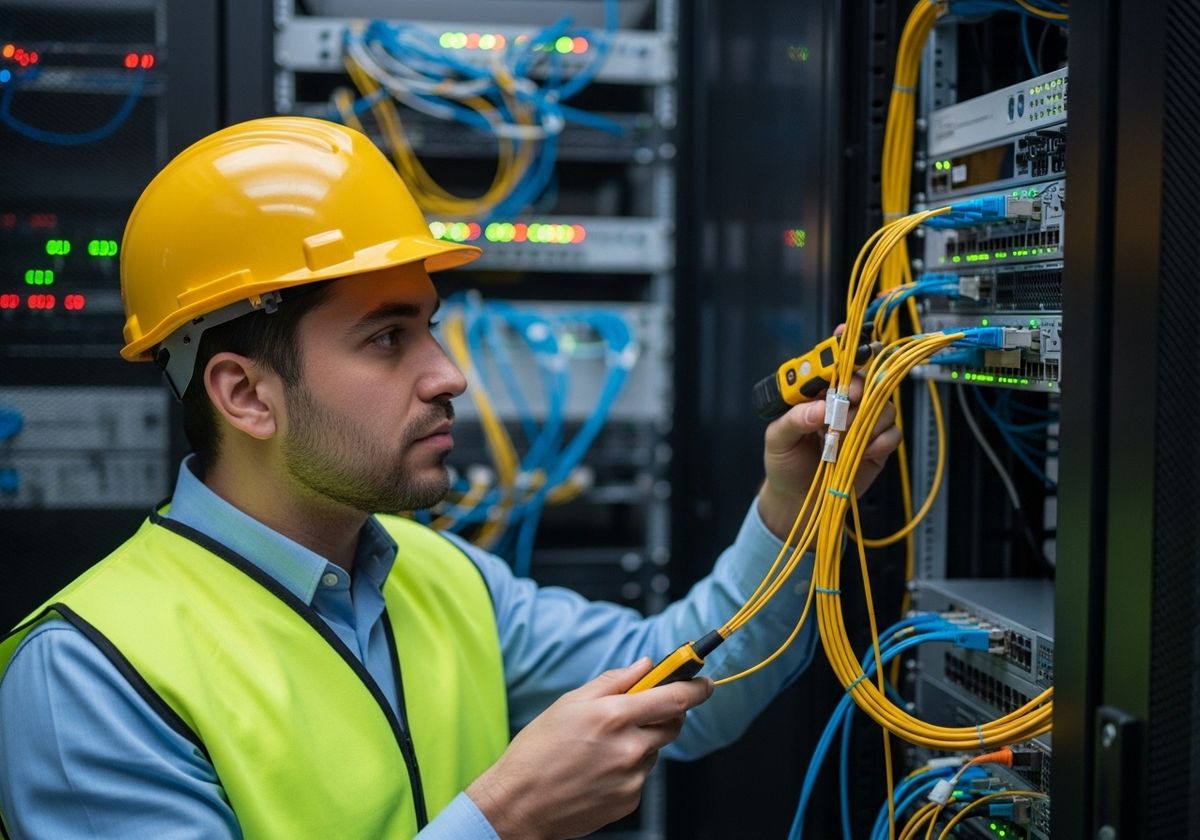
As technology advances, the demands on your fiber backbone increase exponentially. Knowing when to upgrade is crucial for maintaining optimal performance and avoiding costly downtime. That's why Advanced Resource Contractors put together this guide to help you determine when it's time to consider upgrading your existing fiber backbone.

Signs You Need an Upgrade
Several indicators can signal that your current fiber backbone is struggling to keep up with your organization's demands:
Increased Latency: Noticeable delays in data transmission can frustrate users and disrupt critical applications. This is a key sign that your network is straining under the load.
Frequent Network Congestion: If your network experiences frequent slowdowns, especially during peak hours, it may be a sign that your current infrastructure cannot handle the volume of traffic.
Inability to Support New Technologies: A clear sign that you need an upgrade is if your current fiber backbone cannot support new technologies that your organization wants to implement.
Rising Maintenance Costs: Aging infrastructure often requires more frequent and expensive repairs. Upgrading to a newer system can reduce these ongoing costs and improve reliability.
Limited Scalability: If your current infrastructure cannot easily accommodate future growth, it's time to consider an upgrade. A scalable solution will allow you to expand your network capacity as needed without major disruptions.

Factors to Consider
Before deciding to upgrade, consider the following factors:
Current and Future Bandwidth Needs: Assess your current bandwidth usage and project future needs based on anticipated growth and technological advancements.
Cost-Benefit Analysis: Evaluate the costs associated with upgrading versus the benefits of improved performance, reduced downtime, and increased scalability.
Technology Options: Research the latest fiber optic technologies, such as single-mode fiber, to determine the best solution for your organization's needs.
Downtime Requirements: Plan the upgrade to minimize disruption to your operations. Consider scheduling the upgrade during off-peak hours or implementing redundant systems.
Benefits of Upgrading
Upgrading your fiber backbone can offer numerous benefits:
Improved Performance: A new fiber backbone can significantly improve network speed and reduce latency, leading to better overall performance.
Increased Reliability: Upgrading to newer, more reliable technology can reduce downtime and ensure business continuity.
Enhanced Scalability: A scalable fiber backbone can easily accommodate future growth and technological advancements.
Reduced Costs: While the initial investment may be significant, upgrading can reduce long-term maintenance costs and improve energy efficiency.
Knowing when to upgrade your fiber backbone is essential for maintaining optimal network performance and supporting future growth. By monitoring network performance, assessing bandwidth needs, and considering the factors outlined above, you can make an informed decision about when it's time to invest in an upgrade. At Advanced Resource Contractors, we understand the importance of a robust and reliable network infrastructure. Contact us today to learn more about our broadband upgrade services throughout Arkansas and Western Tennessee.