
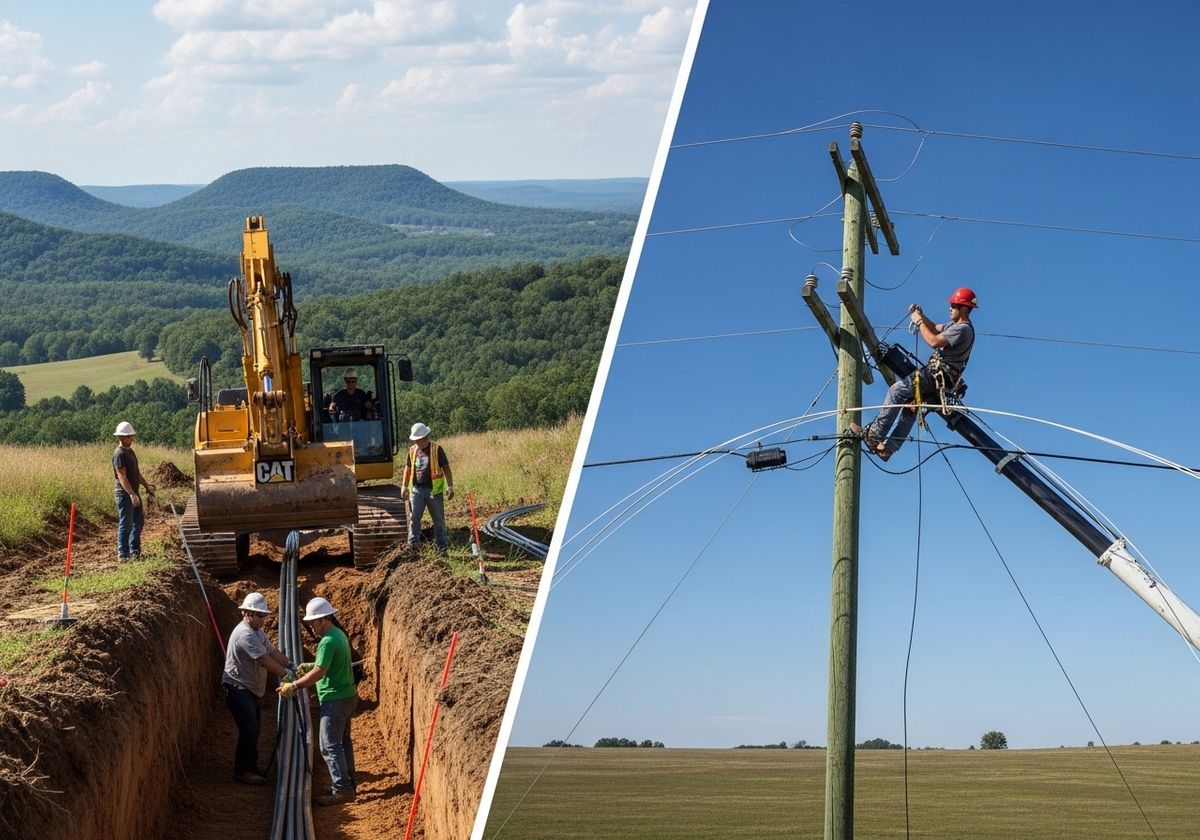
Deploying fiber optic cables across Arkansas presents unique challenges and opportunities. The state's diverse terrain requires careful consideration of deployment methods, primarily underground and aerial. Each approach has its advantages and disadvantages, influencing the speed and efficiency of fiber deployment. Keep reading to learn more about fiber optic installation and deployment from Advanced Resource Contractors.
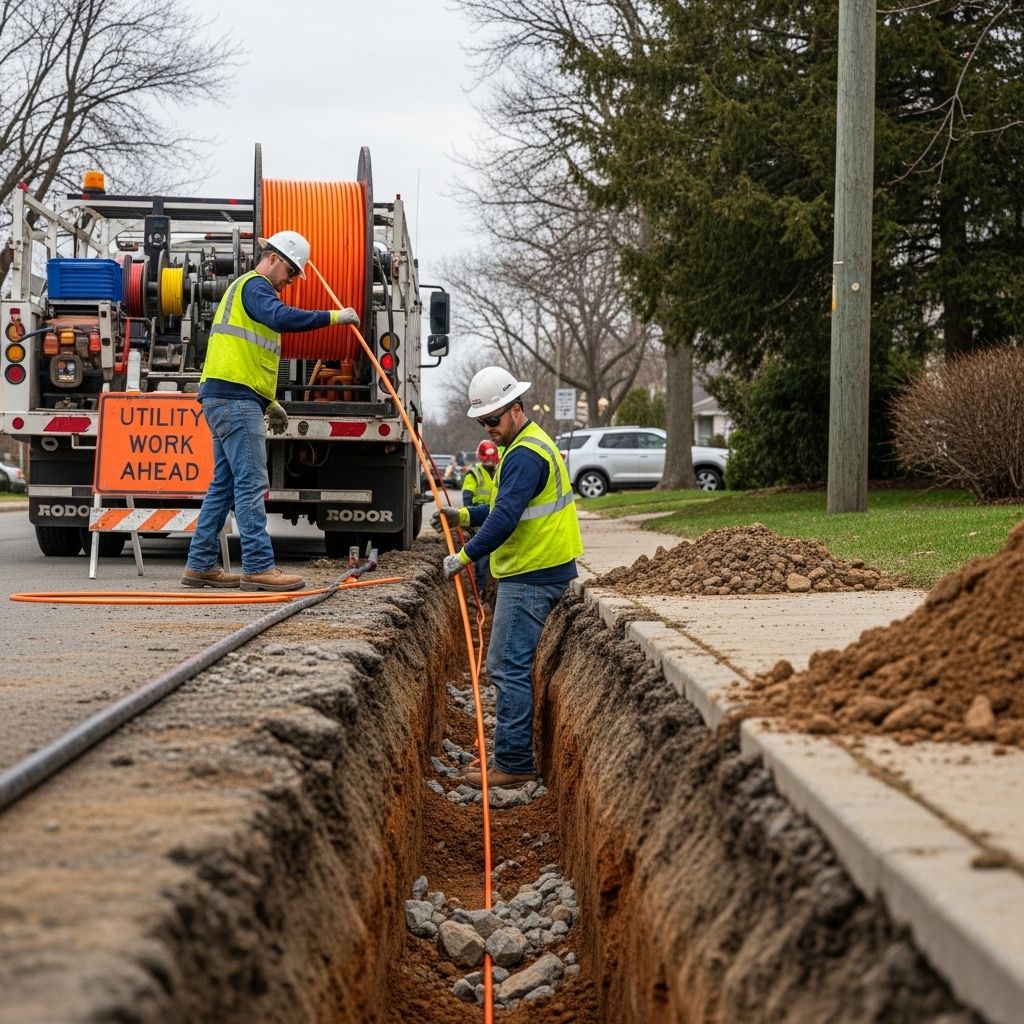
Underground Fiber Deployment
Underground deployment involves burying fiber optic cables in trenches or conduits beneath the surface. This method offers superior protection against weather, physical damage, and unauthorized access. Underground cables are less susceptible to disruptions from storms, falling trees, or vandalism, ensuring more reliable service. However, underground deployment can be slower and more expensive due to the need for excavation, trenching, and potential obstacles such as rocks, rivers, and existing utilities.
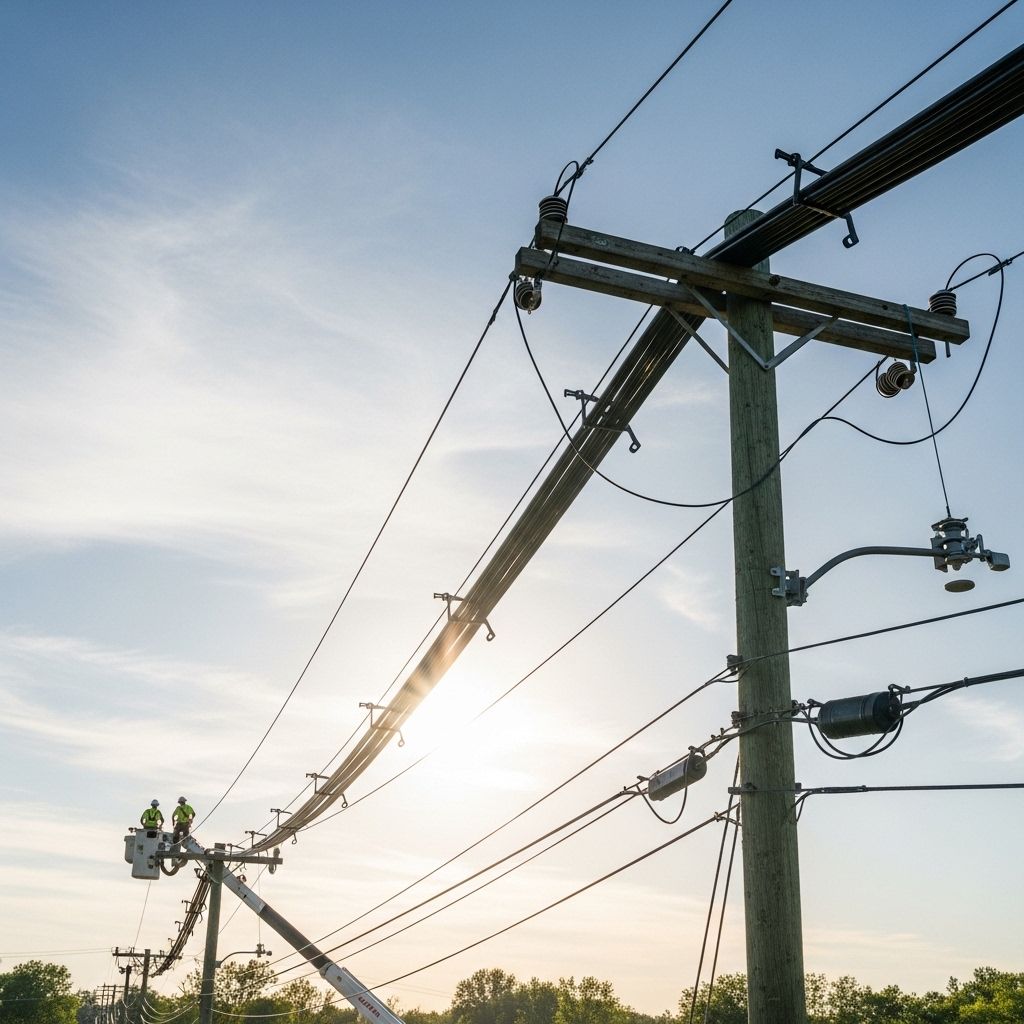
Aerial Fiber Deployment
Aerial deployment involves stringing fiber optic cables on poles, typically alongside existing power or telephone lines. This method is generally faster and less expensive than underground deployment, as it avoids the need for extensive excavation. Aerial deployment is particularly advantageous in areas with challenging terrain or where underground obstacles are prevalent. However, aerial cables are more vulnerable to weather-related damage, such as wind, ice, and lightning strikes. They are also susceptible to damage from falling trees, vehicle accidents, and vandalism.
Navigating Arkansas Terrain
Arkansas's varied landscape, encompassing mountains, forests, and plains, demands a flexible approach to fiber deployment. In mountainous regions, aerial deployment may be more practical due to the difficulty and cost of underground construction. In urban areas, underground deployment may be preferred to minimize visual impact and protect cables from damage. The decision between underground and aerial deployment should be based on a thorough assessment of the specific terrain, environmental factors, and cost considerations.
Choosing between underground and aerial fiber deployment in Arkansas requires a careful evaluation of terrain, cost, and environmental factors. While underground deployment offers superior protection and reliability, it can be slower and more expensive. Aerial deployment is faster and more cost-effective but more vulnerable to damage. For companies in the contractor industry, like Advanced Resource Contractors, understanding these trade-offs is crucial for efficient and successful fiber deployment. Contact us today to learn more about our solutions or request a consultation for your project.